


What AI needs from a product page.
The facts, words and structure that let an answer describe your product with confidence.
Written by: SlateCreated on: 15 October 2026 · 2 min read
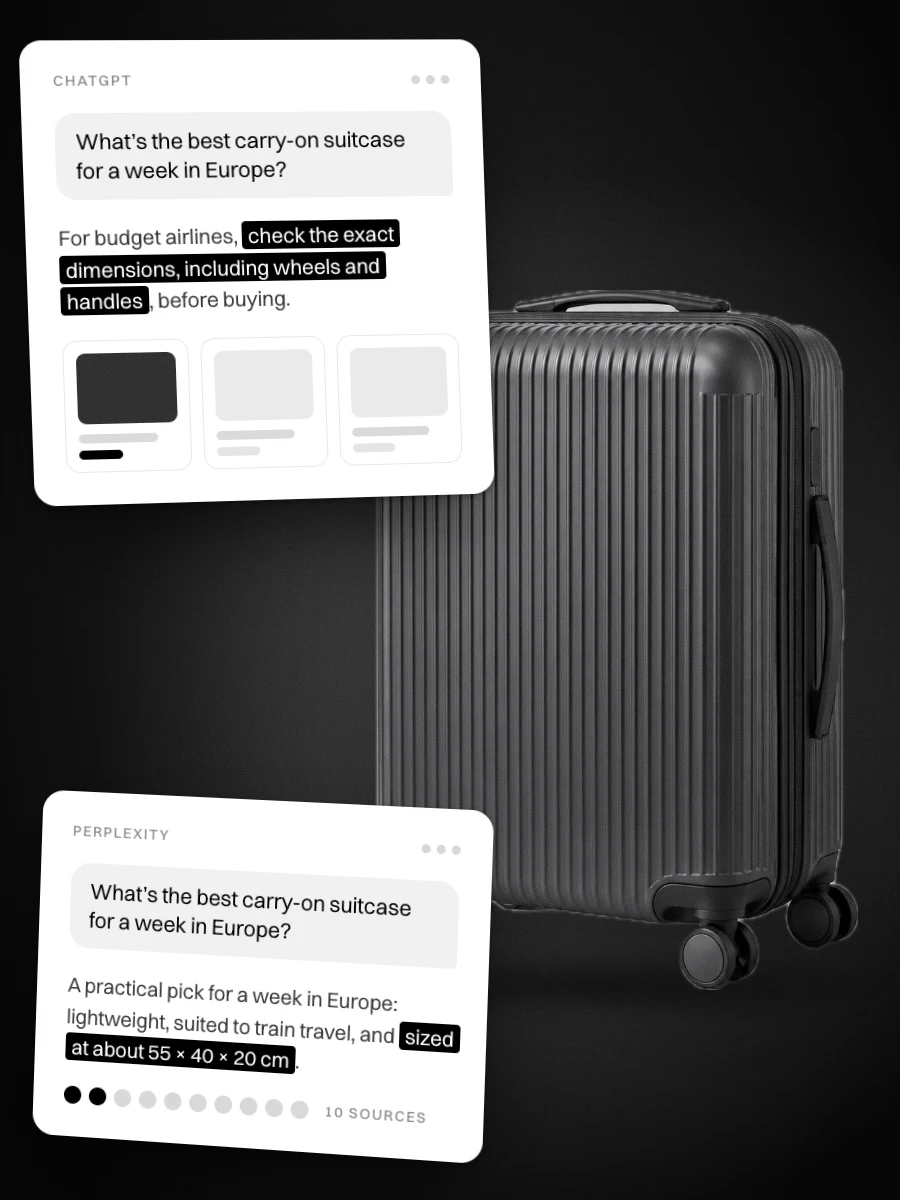
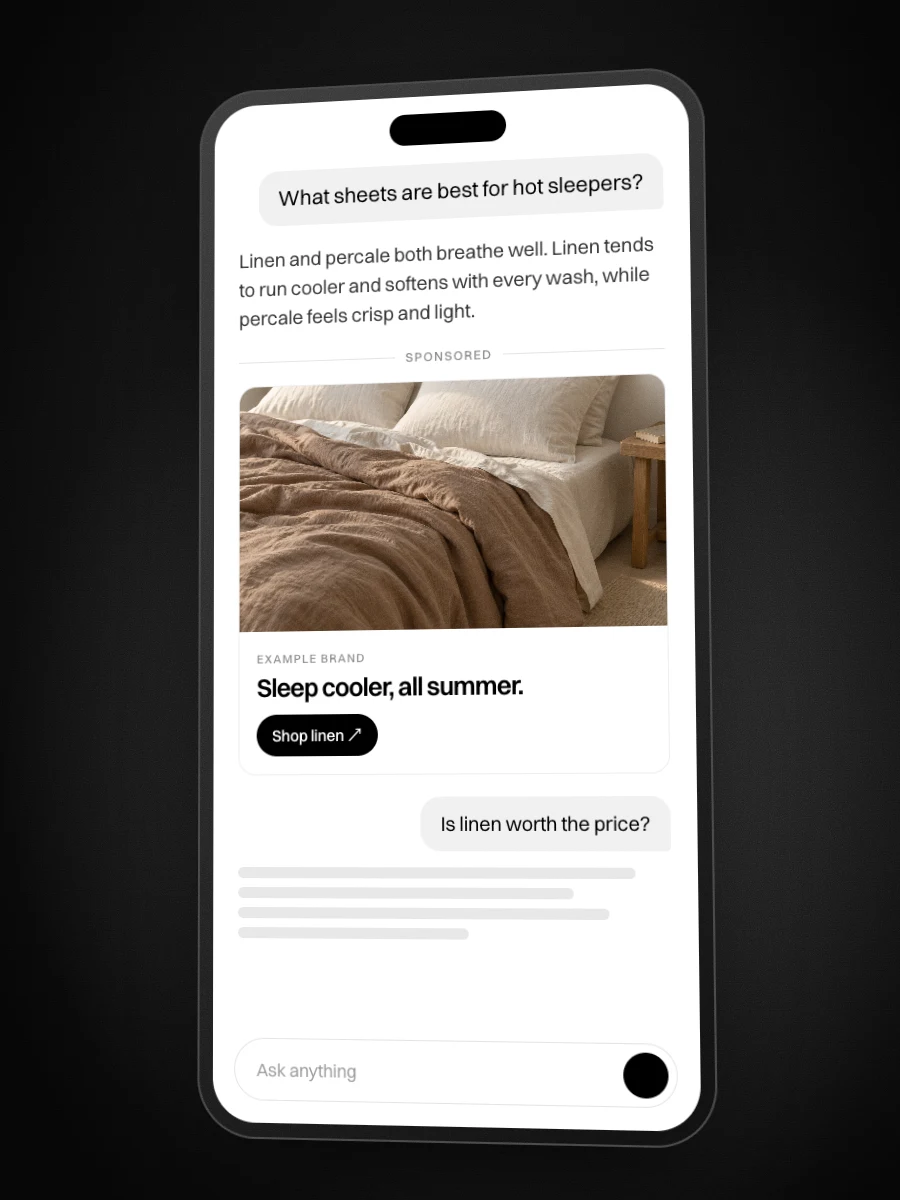
When a shopper asks AI to compare products, the answer is built from what’s been written down about them. Here’s what a product page needs so an answer can describe it with confidence.
1. Facts in plain text
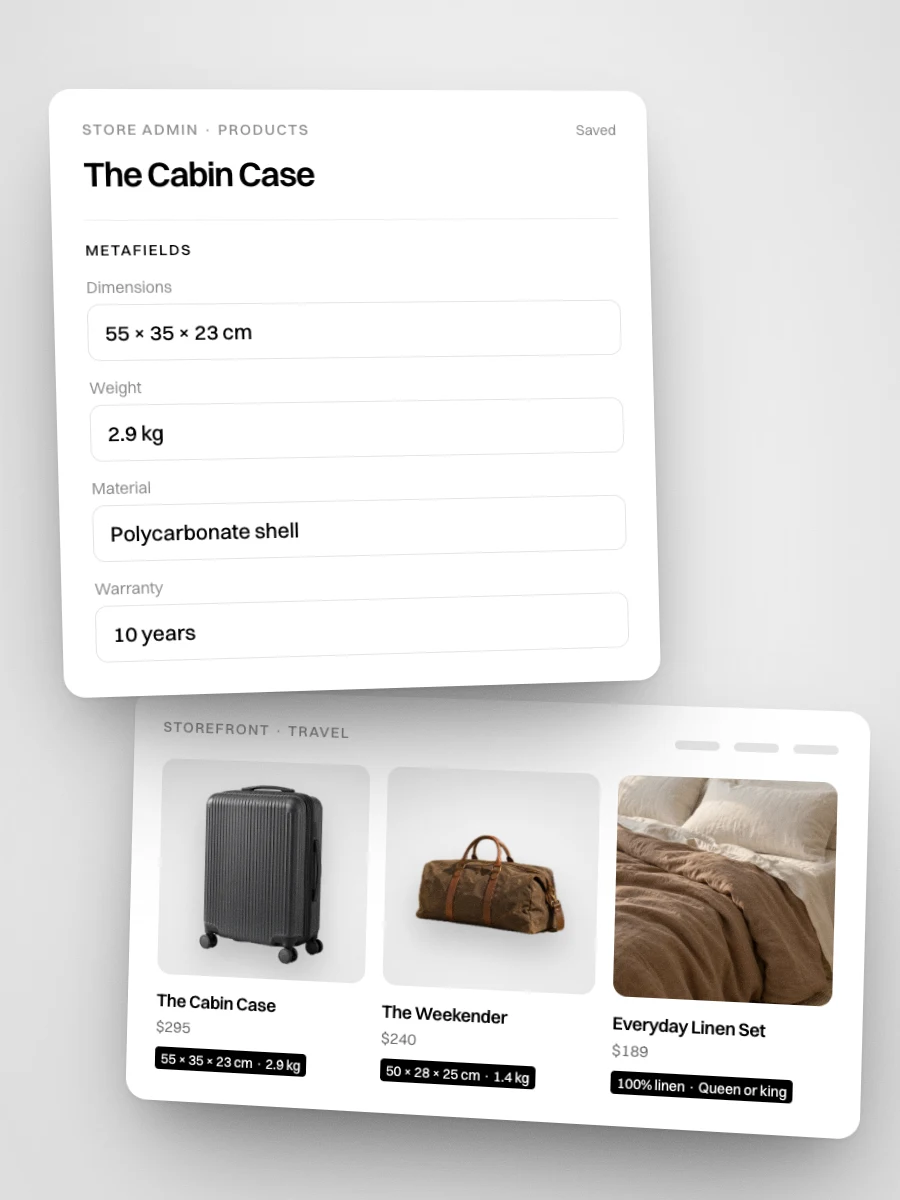
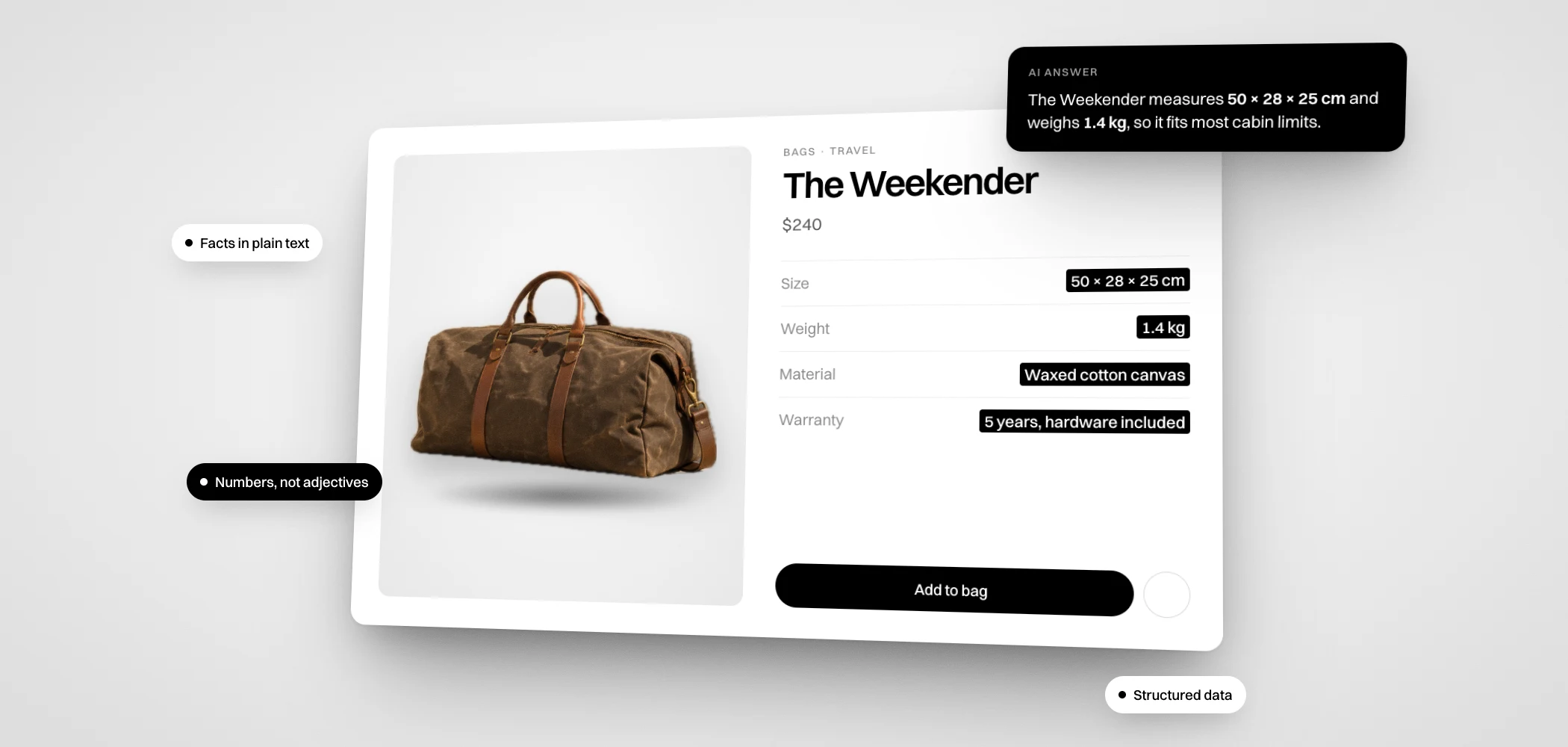
Dimensions with units. Weight. Materials. Capacity. Compatibility. Care. If these only live in an image, a size chart PDF or a video, assume an answer can’t use them. Put them in the page’s text, where they can be read and quoted.
2. Specifics, not adjectives
Lightweight
can’t be compared with anything. 2.9 kg
can. Cabin approved
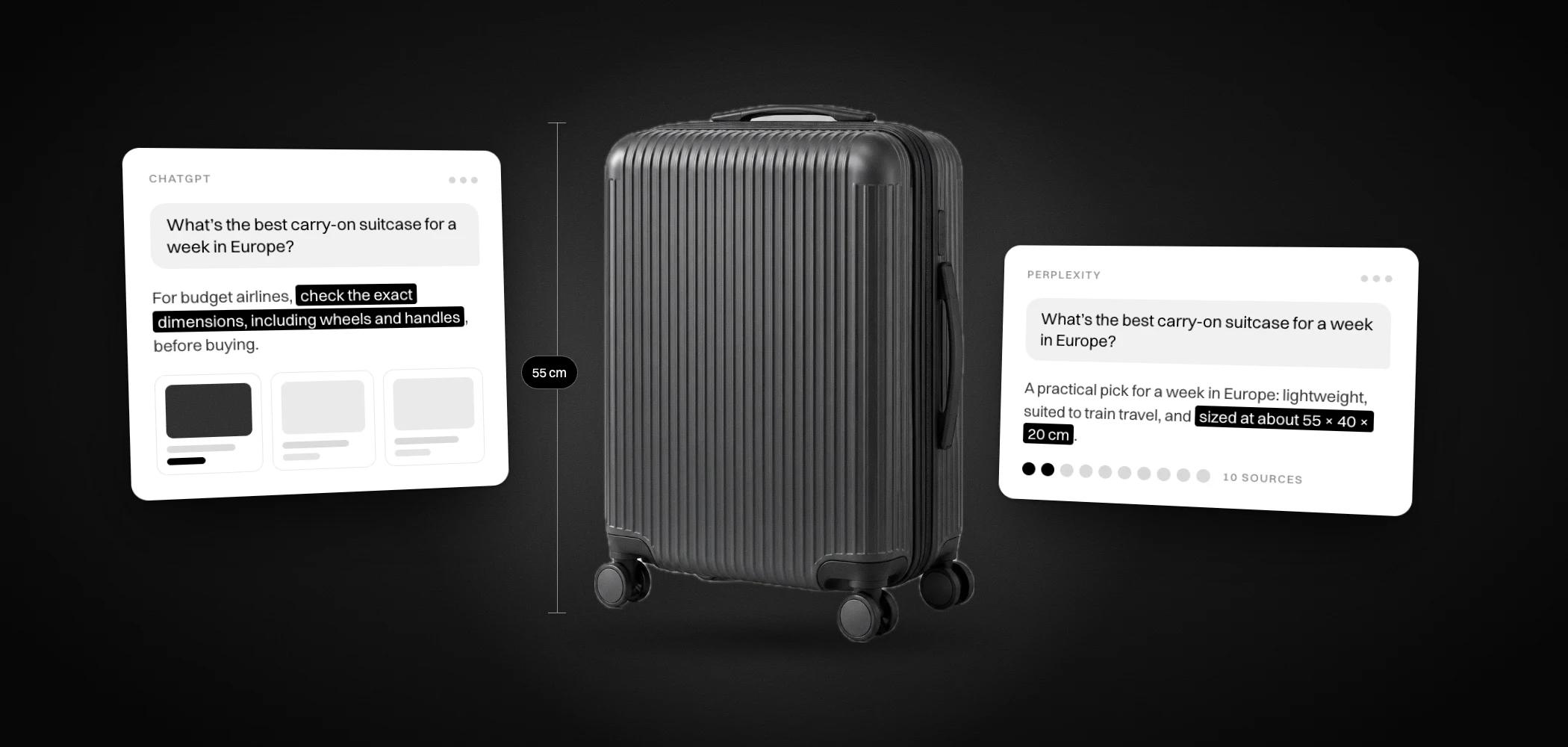
doesn’t answer whether it fits a particular airline. 55 × 35 × 23 cm, including wheels and handles
does. Every adjective on a product page is worth asking: what number or fact is this standing in for?
3. Answers to the questions people actually ask
Shoppers ask about fit, comparisons and suitability. Who is this for? Who isn’t it for? How does it compare with the one they’re also looking at? A short questions section on the page, written in your customers’ words, gives answers something specific to draw on.
4. Structure machines can read
Product structured data (the schema.org Product type) states the name, brand, price, availability, ratings and identifiers like SKU or GTIN in a consistent format. Most store platforms output some of it already. Check that it’s present, complete, and matches what the page shows.
5. Let the right crawlers in
AI tools find pages with their own crawlers, and your robots.txt file decides who gets in. OpenAI says sites that block OAI-SearchBot won’t be shown in ChatGPT’s search answers, apart from navigational links. Perplexity uses PerplexityBot to surface sites in its results. Blocking GPTBot, OpenAI’s training crawler, is a separate choice that doesn’t affect search.
6. Readable without JavaScript
If your product text only appears after scripts run in the browser, some crawlers may never see it. View the page’s source: if the description and specs aren’t in the HTML, ask your developer whether they’re rendered on the server.
7. Consistency everywhere else
Answers lean on more than your site: reviews, buying guides and retailer listings. If a retailer lists the wrong size or an old material, that mistake can travel. Keep the facts consistent wherever your product is described.
Sources: OpenAI, Overview of OpenAI crawlers; Perplexity, Perplexity crawlers. Checked 15 October 2026.